
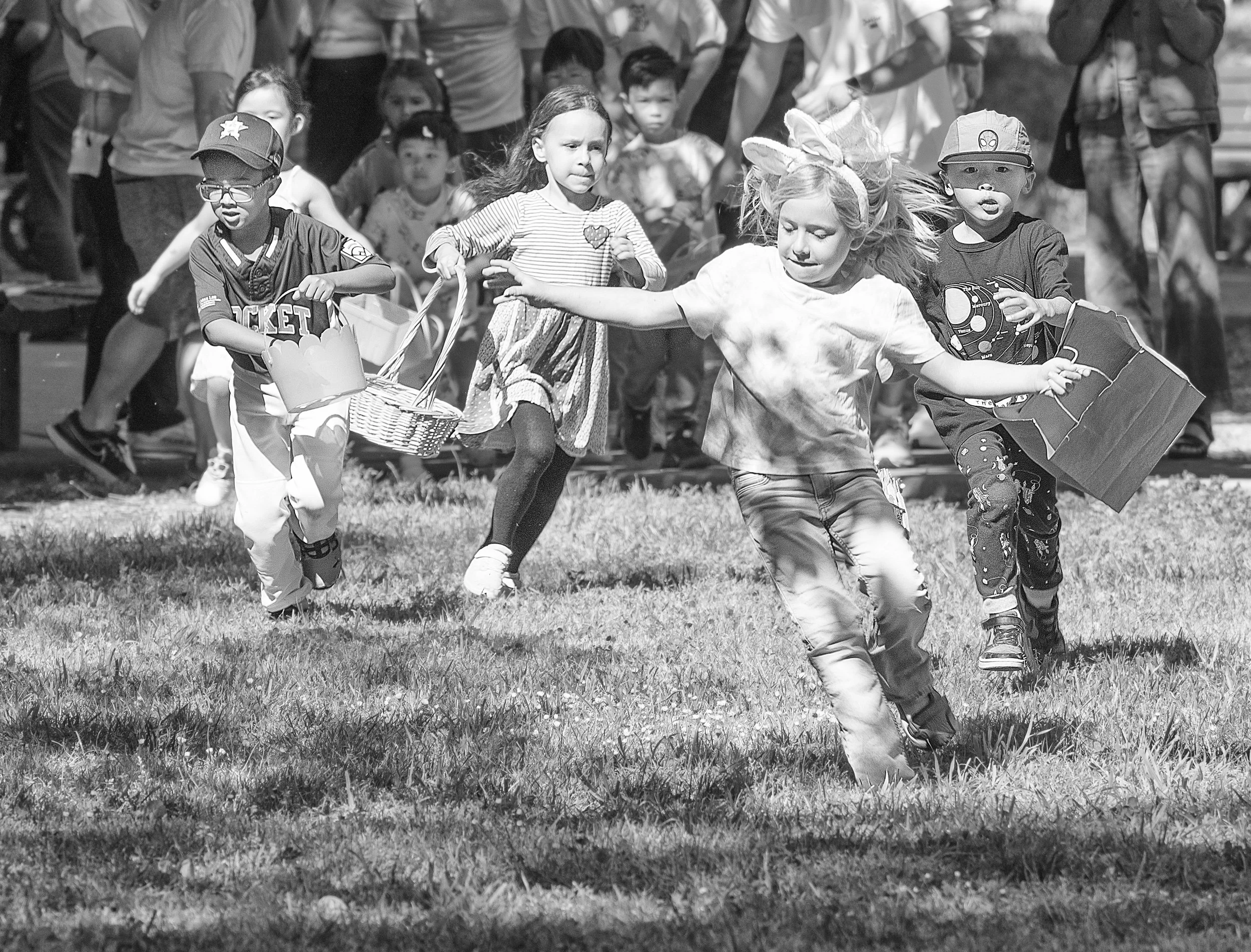
Some photos arrive like invitations. Others behave like ambushes.
Most of mine lean toward ambush.
I spent years in newsrooms where hesitation cost you the picture. That habit stuck. You learn to trust your eye before your brain starts filing objections. By the time logic catches up, the moment has either passed or been captured on film or on a memory card.
On my site, you’ll see what that looks like in practice.
A praying mantis stared back as if I had interrupted something important. Snowy egrets spaced across a frame with better discipline than most committees. A dog locked onto a scent while the rest of us stood around pretending we understood the plan. None of these scenes asked for permission. They showed up and left quickly.
Landscapes behave differently. They sit still, which sounds helpful until you realize they expect patience.
Places like Arches or Yellowstone don’t need a photographer. They’ve been doing fine for a few million years. Still, if you wait long enough, the light shifts and gives you something personal. Old Faithful builds pressure, the crowd leans forward, and for a few seconds, everyone shares the same timing. You press the shutter and hope you chose the right second.
Travel adds its own complications.
In Florence, I once caught a reflection in a bus mirror with two scooters slipping into the edge of the frame. I did not plan this. If I had, I would have ruined it. Decades later, the picture still works, which feels less like skill and more like getting away with something.
Closer to home, the stakes drop and the rewards improve.
Fog settles into Marriott Park and turns familiar paths into something quieter. Rain hits the asphalt, and suddenly the ground looks like a painting you did not intend to make. A winter moon threads itself through oak branches and holds still long enough for you to notice. These are not dramatic scenes. They are patient ones.
We used to call this “wild art” in the newsroom. No assignment, no press conference, no official reason to be there. Just a moment that suggested a story if you paid attention. Those pictures trained me more than anything else. They taught me to keep the camera ready and my expectations low.
The tools have changed. The habit has not.
Some of the photos on the site were taken with an iPhone. Others from cameras that now feel like antiques. The difference matters less than you would think. If you miss the moment, no piece of equipment will argue on your behalf.
What ties the work together is simple.
I was there. I noticed. I pressed the shutter.
Not every time. Not even most times. But often enough to build a record.
Photography, for me, is less about making images and more about catching myself paying attention.